Three balances,
one review.
Bank, book and client ledgers, side by side, to the penny. What does not match is a list of items with a fix, not a weekend with a spreadsheet.
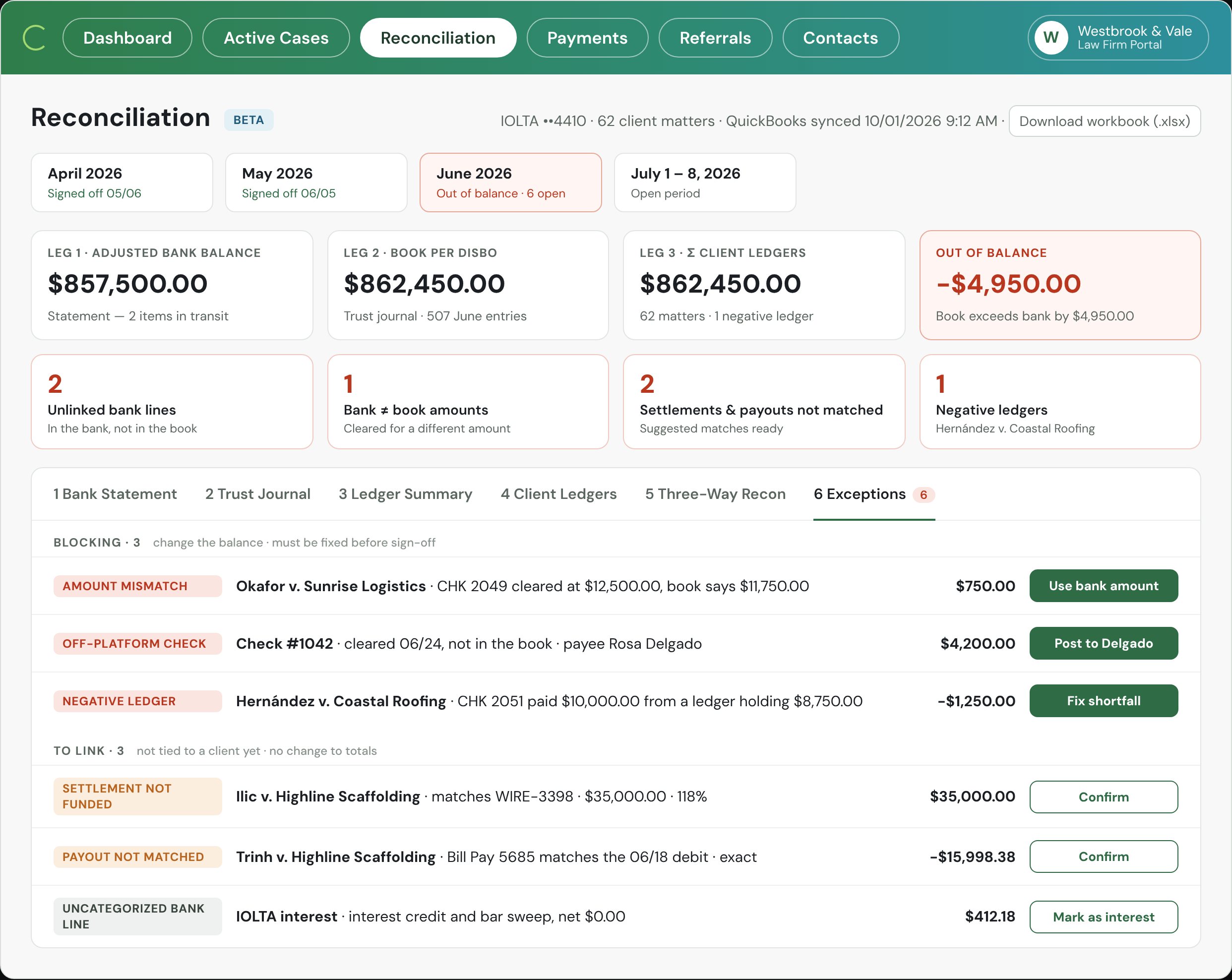
Match what moved, fix what did not.
Disbo already has every entry it recorded. Reconciliation adds the bank and the client ledgers and shows where they disagree.
- 1The statement comes in
Leg one: the bank, adjusted.
The bank statement for the month, with items in transit added back. This is what the bank says you hold.
$857,500.00adjusted bank2items in transit - 2The book per Disbo
Leg two: every entry Disbo recorded.
Each deposit, payout and case cost that ran through Disbo this month, from the trust journal. Nothing typed, nothing duplicated.
507June entries0retyped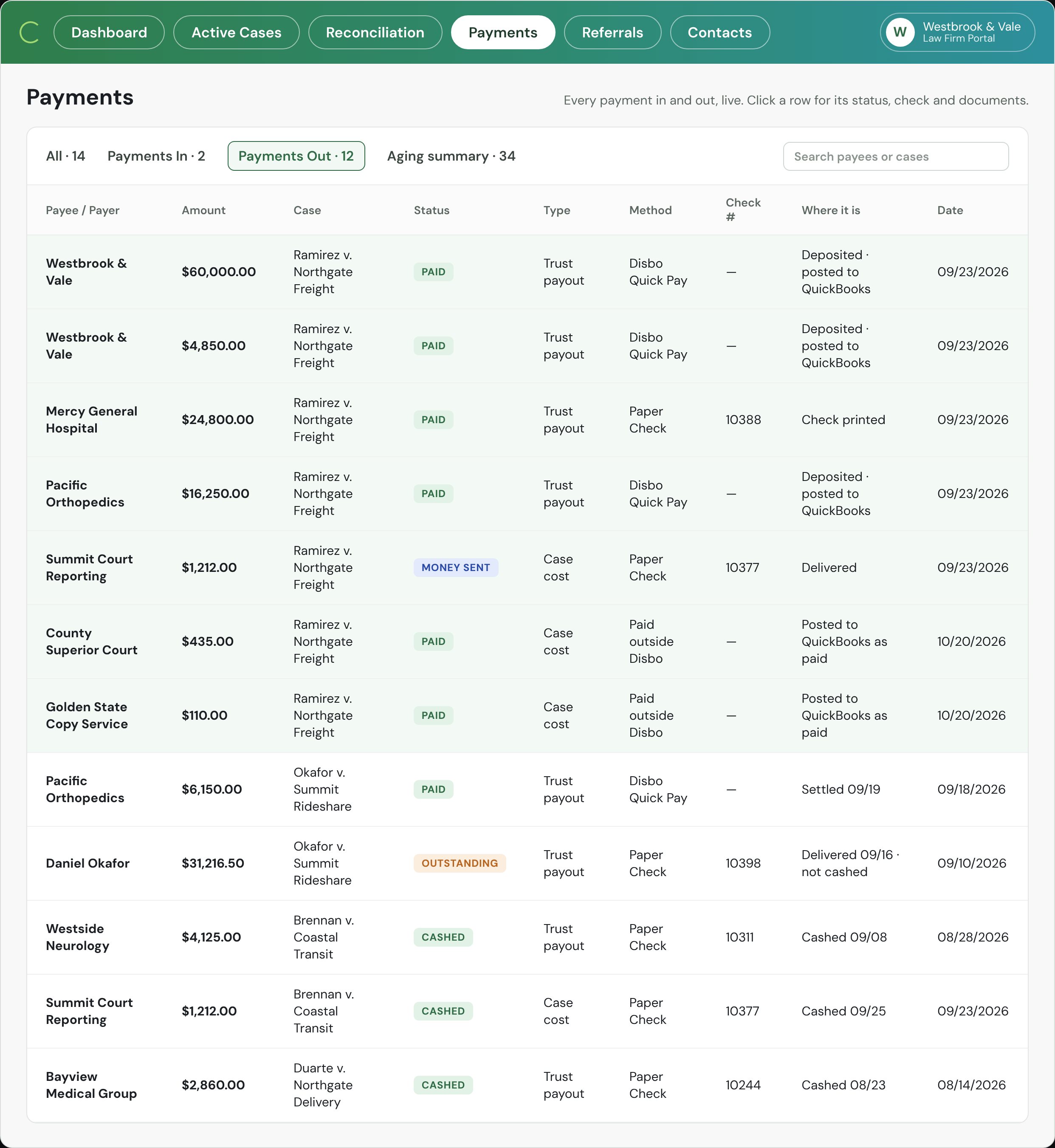
- 3The client ledgers
Leg three: one ledger per matter.
Every open case with its balance. The sum has to equal the book, and no single ledger may be negative. The one that is, is named.
62client matters1negative ledger, flagged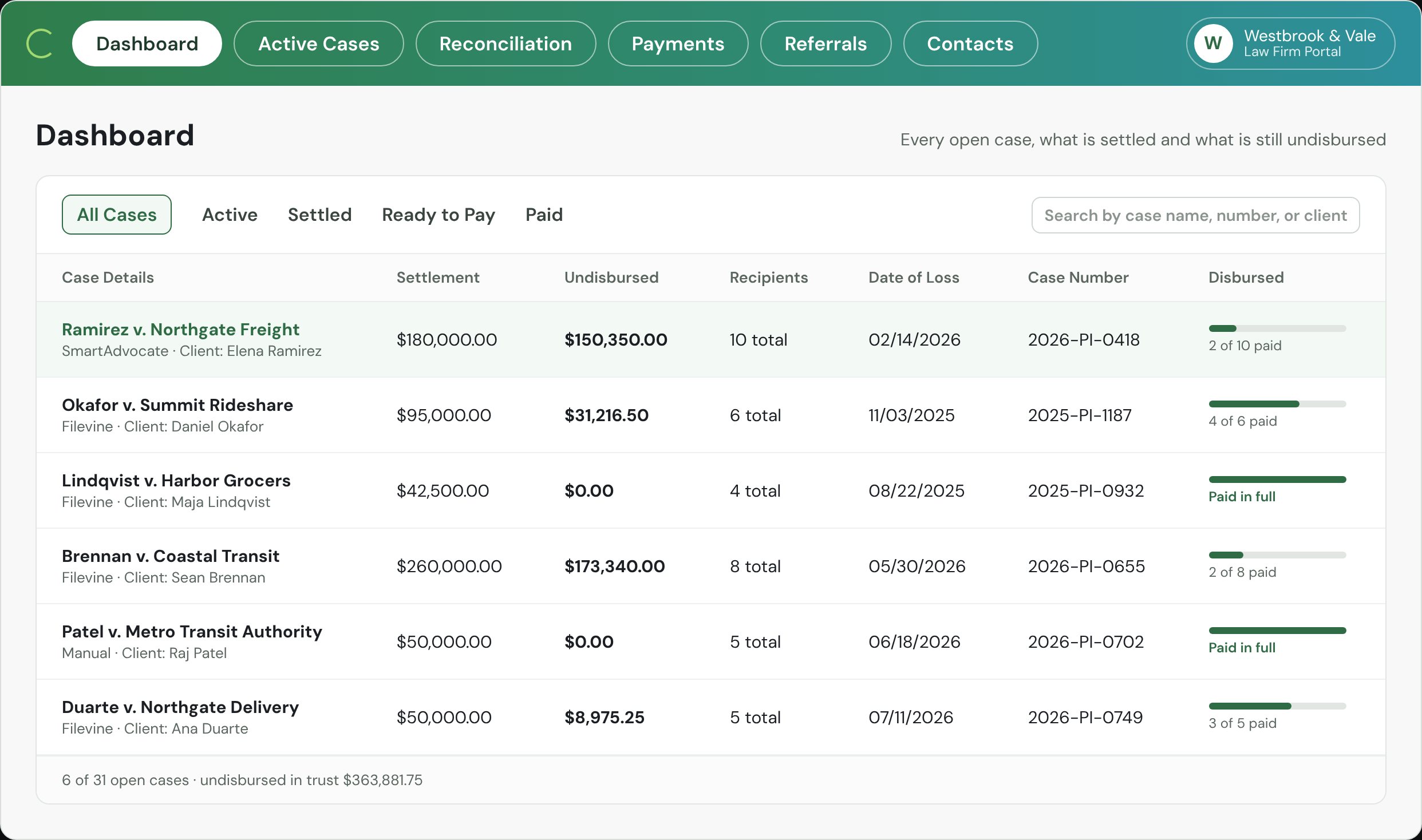
- 4Exceptions, itemized
What is left is a list, not a mystery.
An amount mismatch, an off-platform check, a negative ledger, a settlement not yet funded, an uncategorized bank line. Blocking items change the balance; linking items tie a line to a client. Each has a one-click fix.
3blocking3to link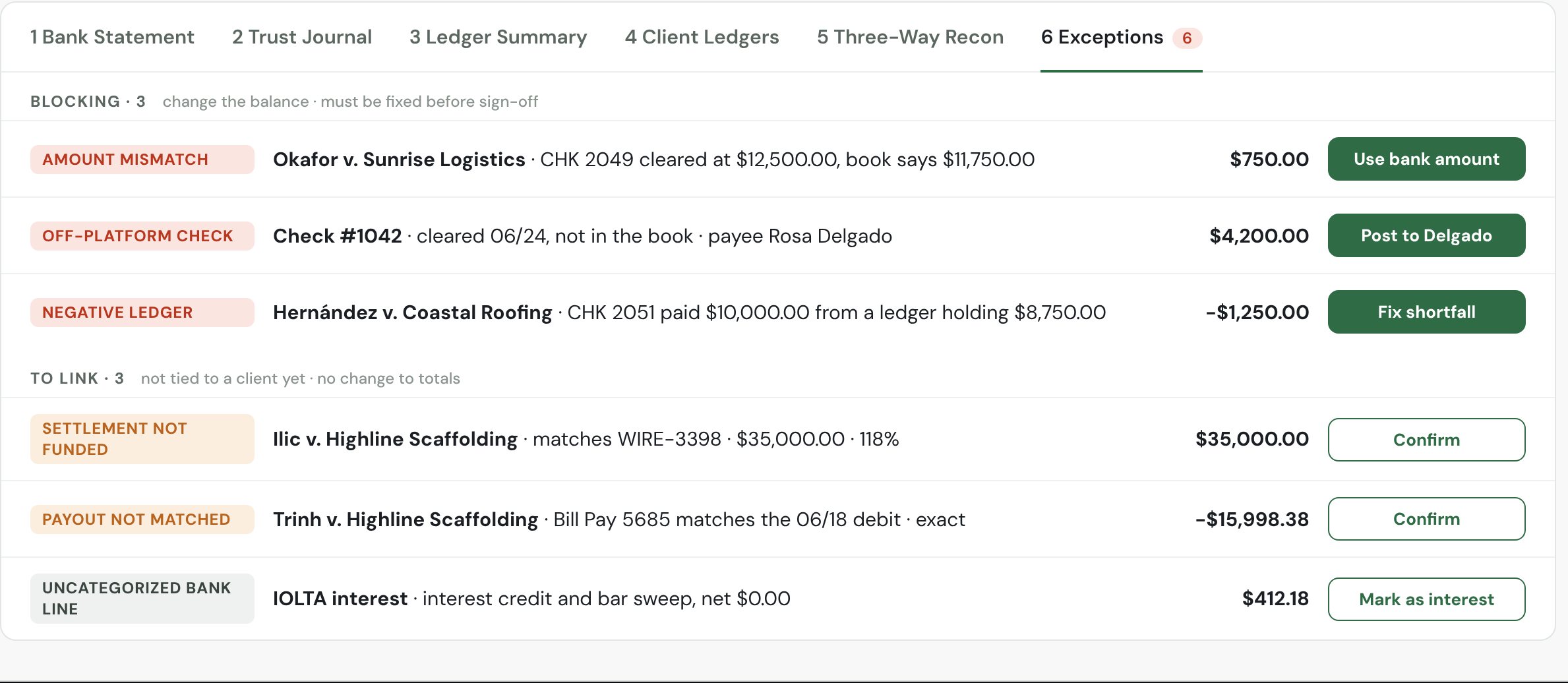
A review, not a rebuild.
Your bookkeeper opens the month, works the list, and signs. The workbook is the record for your CPA and the bar.
Open the month
The three legs are already there. The difference is at the top, with the count of open items.
Work the list
Blocking items first, then linking items. Each click updates the legs; the difference moves toward zero as you go.
Sign and export
At $0.00 the month is signed off. The workbook has the statement, the journal, the ledger summary and the exceptions, by month.
Join the reconciliation beta
Three-way reconciliation is in beta with a small group of firms. If you close your trust month in QuickBooks Online, Sage, NetSuite or Xero, we will set it up with you and your bookkeeper.
Join the beta →The five ways a month goes out of balance.
Each one is an item on the exception list, with the case, the amount and the fix.
Amount mismatch
A check cleared for a different amount than the book says. Use the bank amount, or dispute it, with the case attached.
Off-platform check
A check that cleared the bank but was never in the book: written by hand, or before Disbo. Post it to the client it belongs to.
Negative ledger
A payout larger than the client ledger holding it. The shortfall is named, with the case, before it becomes a bar problem.
Settlement not funded
A wire landed that matches a case but was never linked. Confirm the match and the ledger is funded.
Uncategorized bank line
Interest, a bar sweep, a bank fee. Mark it for what it is so it stops showing up as a difference.
The review itself
Disbo prepares the three legs and the list. Your bookkeeper or CPA reviews and signs off, and the signed month is the export.
Closing the trust month.
What it takes to get bank, book and client ledgers to agree, for one IOLTA.
What the bar asks about.
Three questions a managing partner asks at month-end. Tap one.
Who holds the money?
No one. Most payouts are checks, drawn on your IOLTA and cleared by your bank like any check you write today. The rest are electronic payments that pass through our banking partner instantly and never sit anywhere or earn interest. Disbo holds nothing; it is software, like your bank's bill pay.
What does the audit log show?
One log per payment: who prepared it, who approved it, and when it was sent, delivered, and cashed. Uncashed checks are aged by days outstanding. Every open case shows its settlement, what is still in trust, and who has been paid, so nothing lives in a side spreadsheet.
Who has looked at this?
The flow of funds has been reviewed with the California State Bar, other state bars, Ellen Pansky's office, and IOLTA.org. Fees come only from operating. Every payout is tied to a case and a payee. Disbo charges nothing to your clients and has no law firm investors.
Questions about reconciliation.
Is three-way reconciliation live?
It is in beta. Each month Disbo prepares the adjusted bank balance, the trust journal and the client ledgers side by side, itemizes any difference for your review, and exports the report. Firms in the beta run it alongside their current process; the responsible lawyer still reviews, resolves and signs.
Does Disbo reconcile our bank account?
Disbo prepares the three legs and the exceptions from the payments it already recorded. Your accountant or responsible lawyer reviews and signs; Disbo does not sign for you.
What about payments we made outside Disbo?
Checks written in QuickBooks or in the office are picked up and shown on the case, so the book leg is complete. An off-platform check that cleared the bank but is not in the book shows up as an exception with a one-click fix.
What does the export look like?
A workbook: bank statement, trust journal, ledger summary, client ledgers, three-way recon and exceptions, with prepared-by and reviewed-by on the cover. One per trust account, per month.
Which states' formats does it follow?
The workbook follows the three-way format bars ask for: bank, book, client ledgers, reconciled to each other. Requirements vary by state and the firm remains responsible for its trust accounting; we reviewed the flow of funds with the California State Bar, other bars, Ellen Pansky's office and IOLTA.org.
Month-end on your
own numbers.
Thirty minutes. We'll run one case from deposit to reconciled books and show you what the workbook looks like.
Book a Demo →