Pay by ACH to a bank
the payee linked.
The client, the provider or co-counsel links a bank once, through Disbo. Staff never see an account number. The payment leaves your own IOLTA and lands in two to three business days, with the documents attached.
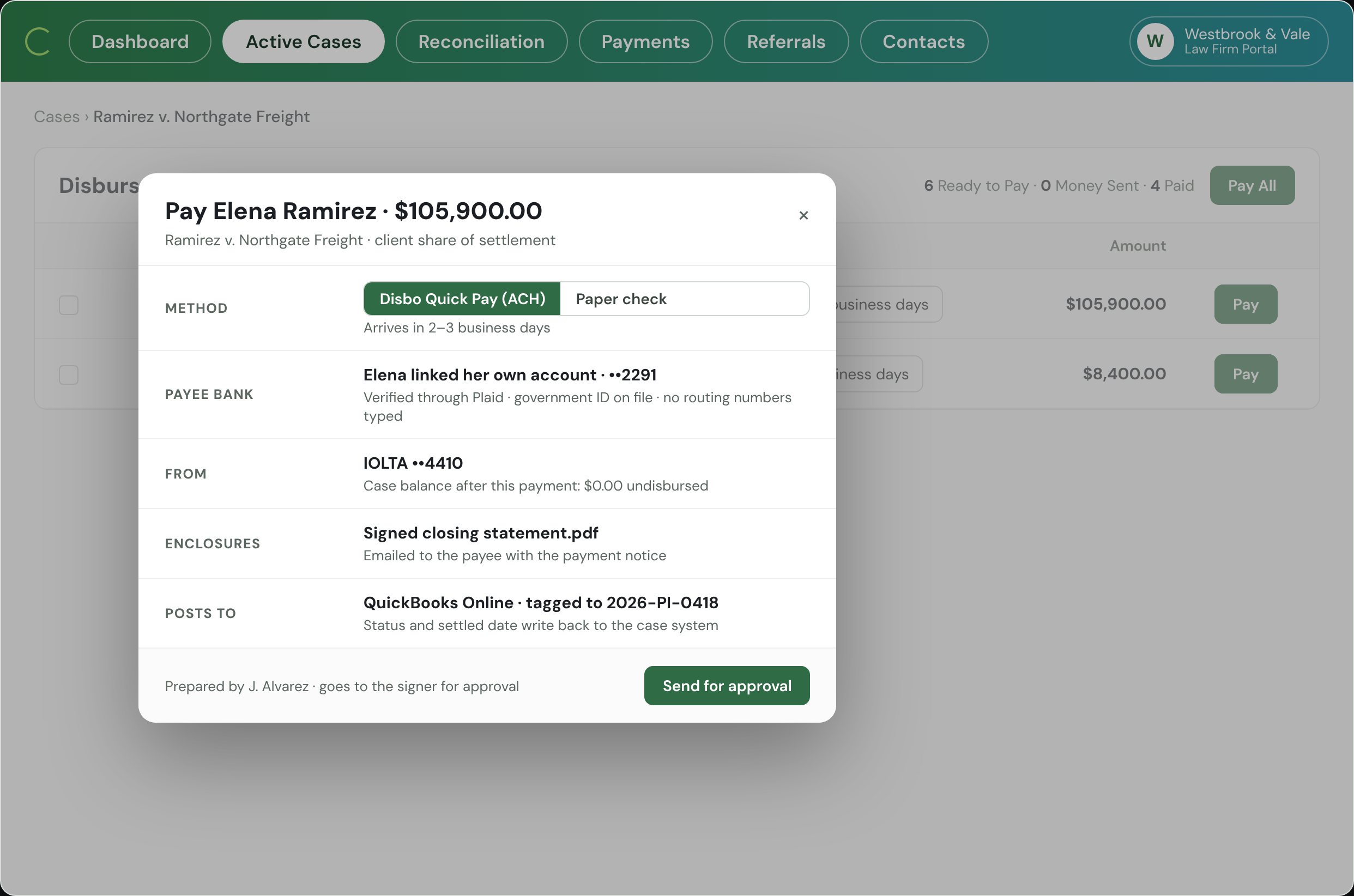
Invite, link, release, settled.
The payee does the linking. Your staff do the queuing. Your signer does the releasing.
- 1Invite the payee
A text or email from your firm.
The client or the provider gets an invitation with your firm's name and the case. One tap to open it, on a phone.
1invitation0forms to print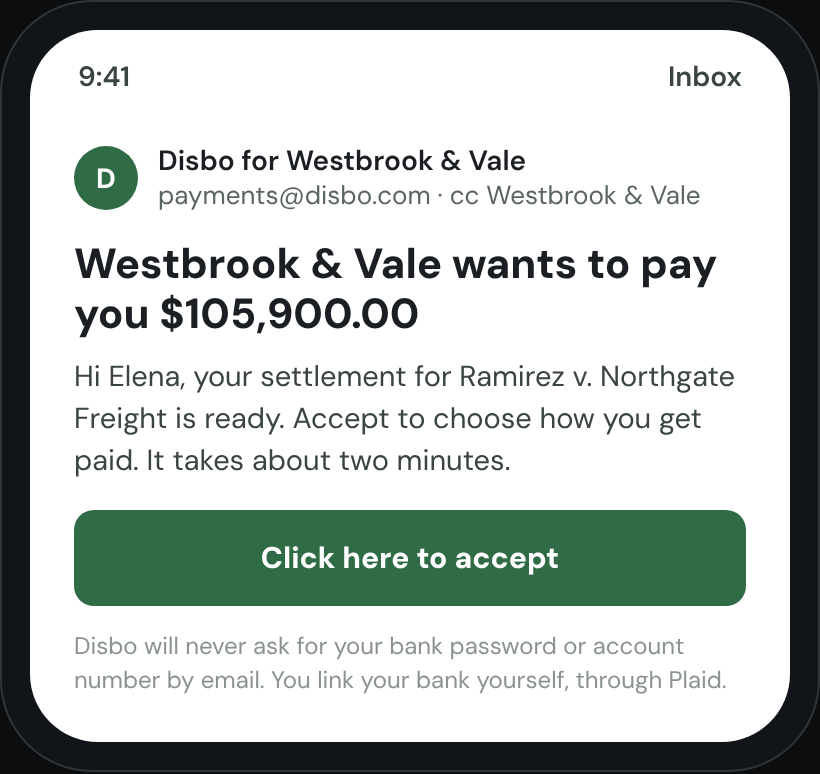
- 2They link a bank
They link, you never see it.
The payee connects a bank account through Disbo. Verified, stored on their side, reused for every payout. Staff see "linked", never the number.
Linkedis all staff see1time, then reused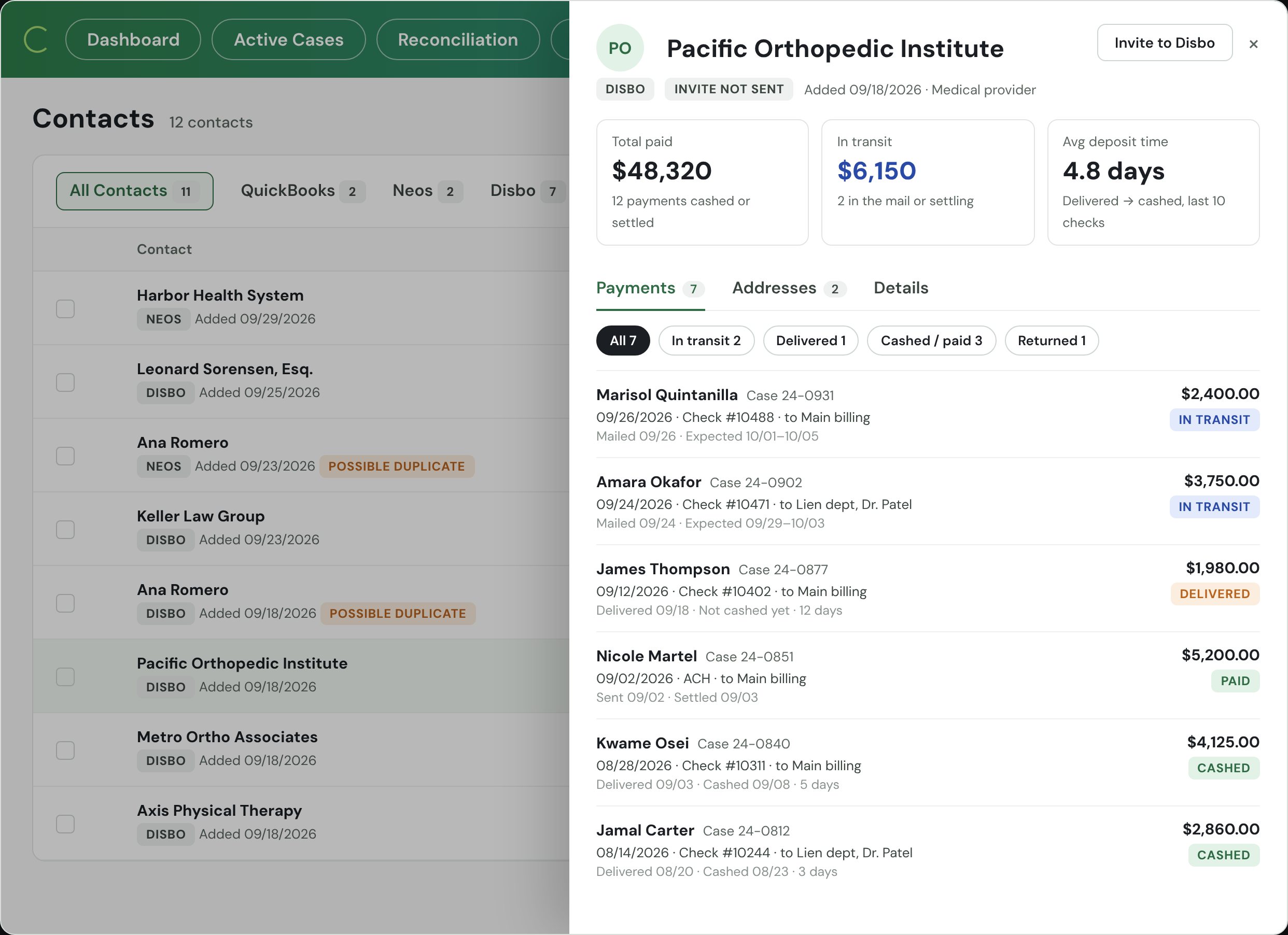
- 3Signer releases
Queued by staff, released by your signer.
The payout sits on the sheet until the signer approves it from a phone with a second factor. The closing statement is attached to the payment.
2people to move money1document attached - 4Settled and posted
Settled in days, posted to the books.
The payee gets a notice with the case and the amount. The entry posts to your accounting system against the case, and the settled date comes back to the record.
2–3business days1entry, tagged to the case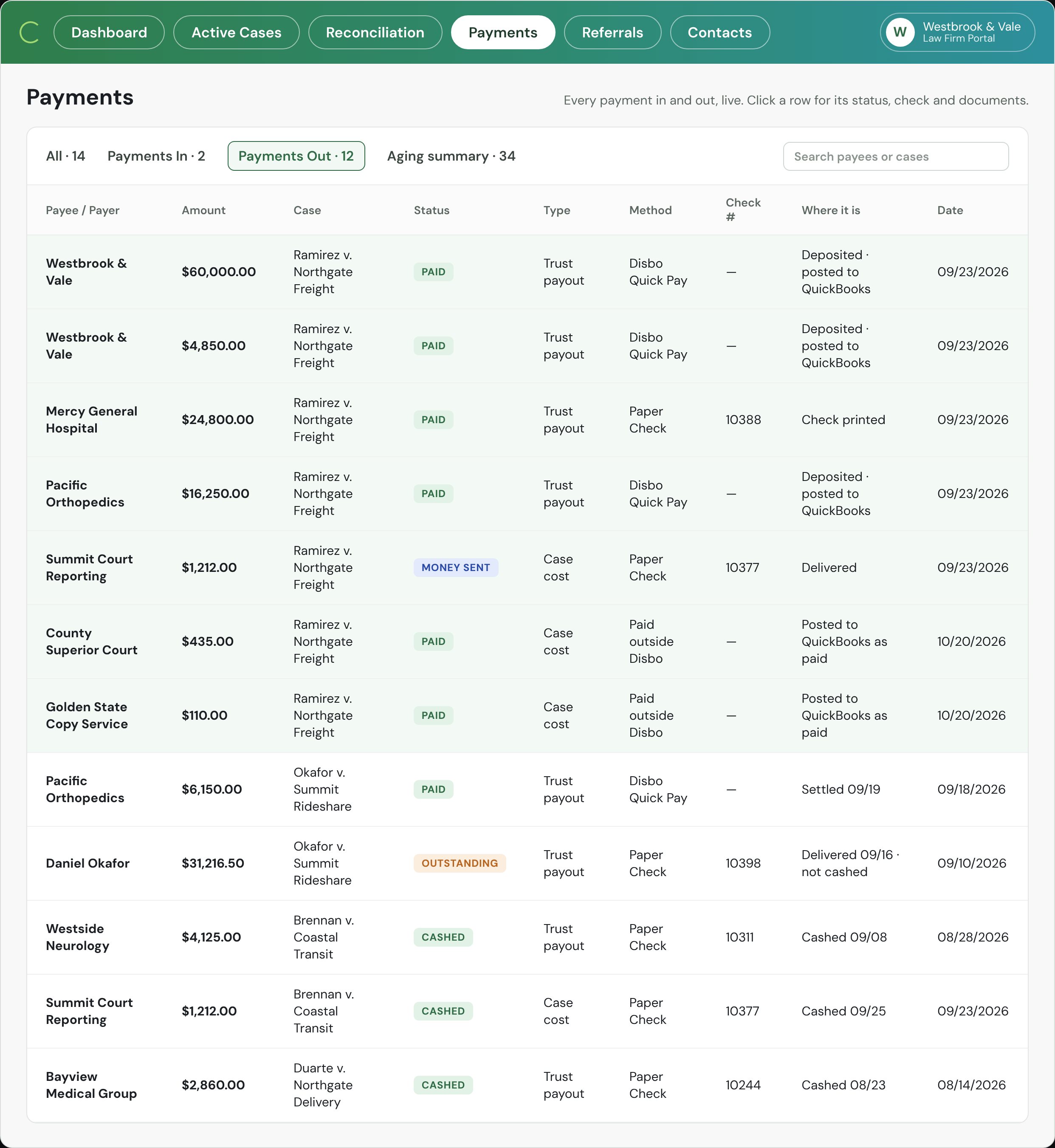
Anyone with a bank account and a phone.
Each payee links once. After that, paying them is the same click as everyone else on the sheet.
The client
Their share, to the account they chose, with the closing statement attached. No check to wait for, no bank hold on a large deposit.
Medical providers and lienholders
Billing offices that get paid by many firms link once and get every payment the same way. The lien letter travels with it.
Co-counsel and referral fees
Fee splits by ACH with the agreement attached, from trust or from operating as your policy says.
Case-cost vendors and your own firm
Court reporters, experts, filing fees, and the fee transfer to your operating account, each tagged to the case.
From release to usable funds.
For a client who linked a bank, compared with a mailed check.
What the bar asks about.
Three questions a managing partner asks about electronic payouts. Tap one.
Who holds the money?
No one. Most payouts are checks, drawn on your IOLTA and cleared by your bank like any check you write today. The rest are electronic payments that pass through our banking partner instantly and never sit anywhere or earn interest. Disbo holds nothing; it is software, like your bank's bill pay.
Who can send a payment?
Staff prepare payouts. Only a registered admin or an authorized signer can release them, from a phone, with two-factor on every send. You can require a second approver above any amount you choose.
Who can see our documents and bank details?
Privileged firm documents are accessible only to a two-person, US-based support team under NDA. Payees link their own bank through Plaid with a government ID on file, so routing and account numbers never live in Disbo and an emailed bank change can't change anything.
Questions about ACH.
Does our bank charge us for each ACH?
No. Disbo pulls the payout from IOLTA the way a subscription would, so the firm initiates nothing at the bank and pays no per-ACH bank fee.
Is same-day ACH extra?
No. Standard and same-day ACH are the same rate, one rate per plan.
What shows on our bank statement?
A custom descriptor per transaction, for example the recipient name and the case initials.
What if the client doesn't have a bank account?
They get a check, printed and mailed. Nobody has to enroll to be paid.
What if someone emails us a new bank account?
It changes nothing. Payment goes only to the bank the payee linked through Plaid; a new account means they link it again themselves.
What does ACH cost?
One rate per payout, the same as a check: $4.97 month to month under 100 payouts a month, less on a plan or a one-year agreement. Wires are about $15, on request.
Pay your next client
in two days, not two weeks.
Thirty minutes. We'll run one disbursement end to end on your own case numbers.
Book a Demo →